
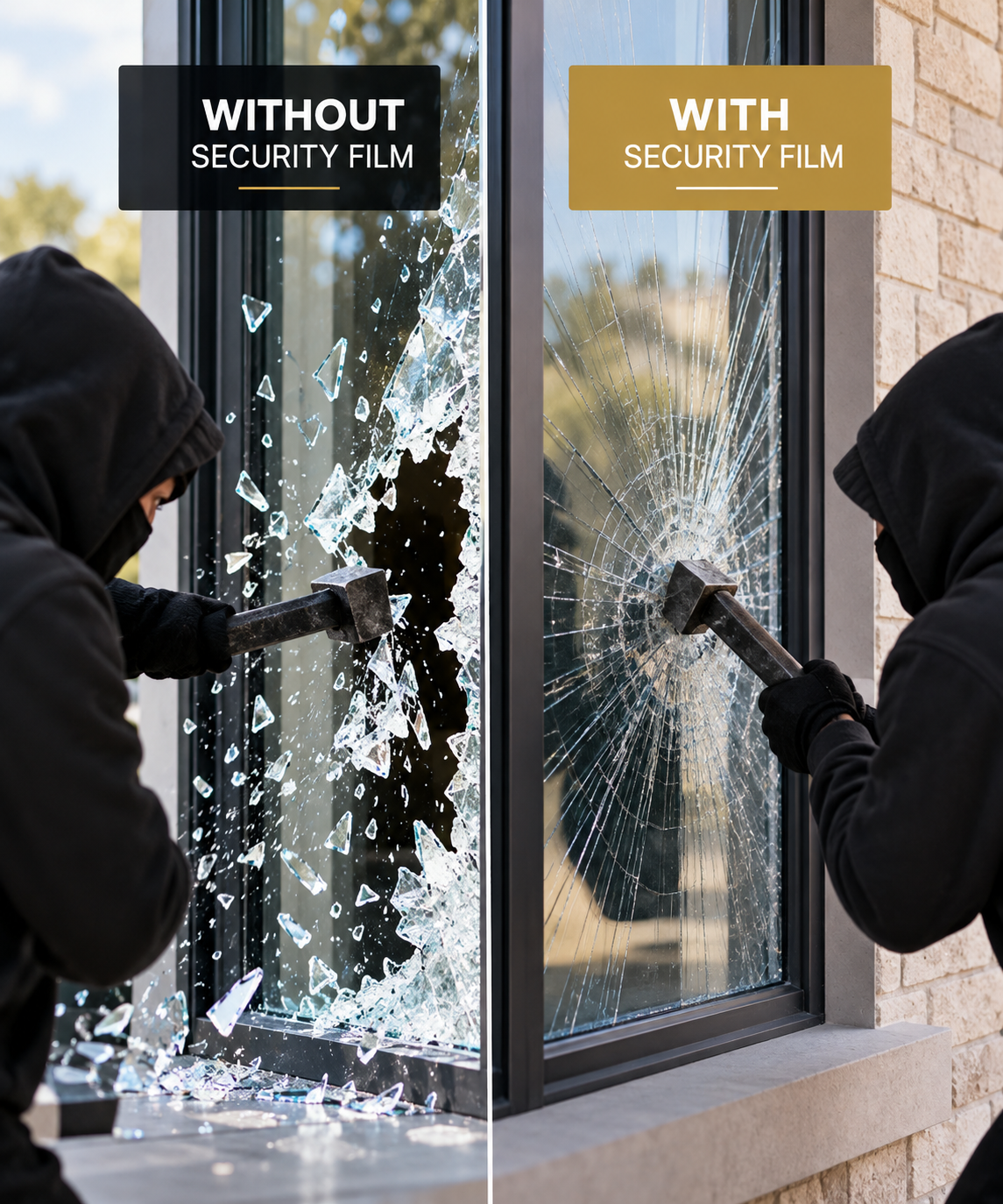
When property owners first hear about window security film, one of the most common questions is whether it can prevent a break-in.
The short answer is that window security film should not be treated as a break-in-proof barrier. Glass can still break after an impact. What security film is designed to do is help keep broken glass fragments more connected and add another layer of resistance to the existing glazing system.
That distinction matters because the performance of a window depends on more than the film alone. The glass, frame, film, installation method, attachment system, and type of impact all influence the final result.
Crystal Co. provides professional window security film installation for suitable residential and commercial glazing.
What Happens When Glass With Security Film Is Broken?
Ordinary glass may break into loose fragments after an impact. Security film is bonded to the glass surface and is designed to help keep more of those broken fragments connected after breakage.
Instead of the damaged pane immediately separating into loose pieces, the film can help the broken glass remain together as a more connected sheet.
This does not mean the glass becomes unbreakable. The pane may still crack or break. The purpose of the film is to change how the damaged glass behaves after impact and to add resistance to the glazing system.
Does Window Security Film Stop a Break-In?
No product should be presented as guaranteeing that a break-in cannot occur.
Window security film may make forced entry through suitable glazing more difficult because the broken glass can remain held together rather than immediately falling away from the opening.
However, the amount of resistance depends on the complete glazing system and the circumstances of the impact.
Security film should therefore be viewed as one part of a broader property-protection strategy rather than as an absolute barrier.
Why the Film Alone Does Not Determine Performance
A security-film installation involves several components working together.
The Existing Glass
Different types of glazing behave differently after impact. The thickness, construction, condition, and size of the glass all matter when evaluating a security-film application.
The Security Film
Security films are available in different specifications. The appropriate product should be selected according to the glass, property, installation method, and protection objective rather than simply choosing the thickest film available.
The Window Frame
A pane of glass is part of a larger window system. The surrounding frame and the way the glass is retained within that frame influence how the system behaves after impact.
The Installation Method
Film preparation, application, edge conditions, and any required attachment details can influence the final installation. This is why professional assessment should consider the whole glazing system rather than treating the film as a standalone product.
Can Security Film Delay Forced Entry?
In suitable applications, security film can add resistance to a window after the glass breaks because the damaged fragments may remain more connected.
That can make the opening more difficult to clear immediately than untreated broken glass.
The degree of resistance varies, however, and there is no universal amount of time that applies to every window or every impact.
Variables include the film selected, glass type, frame, attachment method, size of the pane, tools used, and how the impact occurs.
Security Film Is Not the Same as Shatterproof Glass
Terms such as “shatterproof,” “break-in-proof,” or “unbreakable” can create unrealistic expectations.
Security film does not prevent glass from cracking or breaking under every impact. Instead, it is designed to improve glass-fragment retention and add resistance after breakage.
A professional recommendation should therefore be based on the documented performance of the selected product and the actual glazing system being treated.
Where Is Window Security Film Commonly Considered?
Security film may be considered for suitable exposed glazing in both residential and commercial properties.
Residential Applications
- Front-door glass panels
- Door sidelights
- Ground-floor windows
- Basement windows
- Patio and glass doors
- Entryway glazing
- Other exposed residential glass areas
Commercial Applications
- Retail storefronts
- Commercial entrances
- Offices
- Restaurants
- Showrooms
- Reception areas
- Street-facing glazing
Does Security Film Help With Accidental Glass Breakage Too?
The glass-fragment-retention function can also be relevant when glass is broken for reasons other than forced entry.
Because the film is designed to help keep broken fragments together, it may reduce the immediate release of loose glass after certain breakage events.
The specific performance depends on the film, glazing, installation, and type of breakage.
Window Security Film vs. Standard Window Tint
Window security film and standard architectural window tint are both applied to glass, but they are generally selected for different primary purposes.
Security film is primarily chosen for glass-fragment retention and added resistance after breakage.
Window tinting is generally selected for comfort-related goals such as glare reduction, solar heat management, daytime privacy, UV reduction, or appearance.
If comfort, glare, or privacy is the main concern, explore Crystal Co.’s residential and commercial window tinting service.
How Much Does Window Security Film Cost?
There is no single price that applies to every installation.
The total cost can depend on the number and size of windows, selected film, existing glass, frames, access conditions, preparation requirements, and installation method.
For a detailed explanation of the pricing factors, read:
Security Film for Windows Cost: What Affects Installation Pricing?
Can Security Film Be Installed on Existing Windows?
In many suitable applications, security film can be installed on existing glazing without replacing the entire window.
The glass type, condition, size, frame, and compatibility with the selected film should still be assessed before installation.
Existing cracks, damaged seals, unusual glazing, or other conditions may affect whether a particular film or installation method is appropriate.
Why Professional Assessment Matters
A security-film recommendation should begin with the actual windows rather than with a generic product description.
Useful information includes photographs of the full glass area, surrounding frame, property type, approximate dimensions, access conditions, and the reason the property owner is considering security film.
Large storefronts, unusual glazing, high windows, or complex frames may require an onsite assessment before the final installation approach can be determined.
Frequently Asked Questions
Does security film make a window impossible to break?
No. The glass can still break. Security film is designed to help retain broken fragments and add resistance to the glazing system after breakage.
Can window security film stop burglars?
Security film should not be described as guaranteeing that a burglar cannot gain entry. It may make the broken glazing more difficult to clear immediately, but performance depends on the complete window system and the circumstances of the impact.
Is thicker security film always better?
Not necessarily. Film selection should be based on the glazing, frame, intended application, installation system, and documented product specifications rather than thickness alone.
Can security film be used on glass doors?
It may be suitable for certain glass doors and entryway glazing. The glass and surrounding frame should be reviewed before installation.
Is security film useful for commercial storefronts?
It may be considered for suitable storefront glazing where better fragment retention and added resistance are desired. Larger commercial installations should be assessed individually.
Can I request an assessment from photos?
Yes. Clear photos of the full glass area, frame, surrounding space, and property type provide a useful starting point. More complex installations may still require an onsite assessment.
Considering Security Film for Your Windows or Doors?
Send photos of the glass, frame, and surrounding area and tell us what you want to protect. Crystal Co. can review the application and help determine the appropriate next step.