

can you tint double pane windows

Can Window Tint Be Installed on Double-Pane Windows?

Double-pane windows are common in modern homes and commercial properties because they use two layers of glass separated by a sealed space to improve overall window performance.

That often leads to an important question for property owners considering window film: can you tint double-pane windows?

In many situations, window film can be installed on suitable double-pane glazing. However, not every film is appropriate for every insulated glass unit. The type of glass, existing coatings, window condition, construction, and characteristics of the selected film should all be considered before installation.

Crystal Co. provides residential and commercial window tinting for suitable existing glazing, with the glass and intended application reviewed before a film is recommended.

What Is a Double-Pane Window?

A double-pane window, also called an insulated glass unit or IGU, contains two panes of glass separated by a sealed space.

Depending on the window system, that space may contain air or insulating gas, and the glass may include coatings designed to influence heat transfer, solar performance, or energy efficiency.

Because a double-pane window works as a complete glazing system rather than as a single sheet of glass, film selection should take the entire assembly into account.

Can Window Film Be Installed on Double-Pane Windows?

Yes. Many double-pane windows can accept professionally selected architectural window film.

The important point is that the film must be suitable for the specific glazing configuration. A product that works well on one window may not automatically be the correct choice for another.

Before installation, the glass type, coatings, exposure, existing condition, and purpose of the film should be reviewed.

This is why professional window tinting should begin with assessing the window rather than simply selecting a film based on how dark or reflective it looks.

Why Film Compatibility Matters on Insulated Glass

Window film changes the way solar energy interacts with glass.

Different films may absorb, reflect, or transmit different portions of solar energy. On insulated glass, the amount of heat absorbed by a pane matters because both panes operate together as part of a sealed window system.

That does not mean double-pane windows should not be tinted. It means the selected film should be matched appropriately to the glazing.

What Should Be Checked Before Tinting Double-Pane Windows?

The Type of Glass

The installer should understand whether the window uses standard clear glass, tempered glass, heat-strengthened glass, laminated glass, tinted glass, or another glazing configuration.

Existing Low-E Coatings

Many modern insulated windows include low-emissivity, or Low-E, coatings.

The presence and position of these coatings can affect film selection. A Low-E window is not automatically unsuitable for film, but the complete glazing configuration should be considered before installation.

The Condition of the Window

Existing cracks, chips, seal problems, edge damage, or other defects should be identified before film is applied.

Window film does not repair an existing insulated-glass failure or correct a damaged window seal.

Solar Exposure

Windows receiving strong direct sunlight may behave differently from shaded windows.

Orientation, glass size, exterior shading, nearby buildings, and daily sun exposure can all be relevant when selecting a film.

The Purpose of the Film

The correct product also depends on what the property owner wants to improve.

  • Reducing uncomfortable glare
  • Managing solar heat
  • Improving daytime privacy
  • Reducing UV exposure associated with interior fading
  • Changing the appearance of the glazing

Can Window Tint Help Reduce Heat on Double-Pane Windows?

Certain architectural window films are designed to reduce a portion of the solar energy entering through glass, which can help make sun-exposed spaces more comfortable.

The amount of improvement depends on the film selected, existing glazing, window orientation, exposure, and other building conditions.

If heat and glare are your main concerns, read our guide: Does Window Tinting Reduce Heat and Glare?

Can Double-Pane Windows Be Tinted for Privacy?

Privacy-oriented films may be available for suitable double-pane windows, but it is important to understand how different privacy films work.

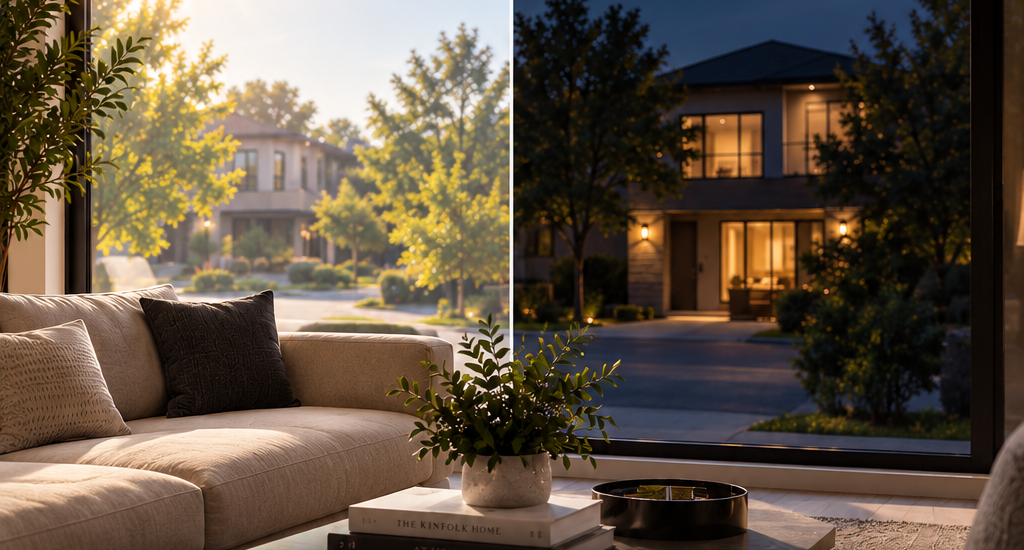
Reflective and privacy films generally provide their strongest privacy effect when the side being viewed from is brighter than the other side.

That means a film that provides useful privacy during daylight may behave differently at night when interior lighting becomes brighter than the exterior.

For a detailed explanation, see Does Privacy Window Film Work at Night?

Will Window Film Damage Double-Pane Windows?

The better question is whether the selected film is compatible with the specific glazing system.

Professionally installed film should be selected according to the type of glass and the intended application. Problems are more likely when an unsuitable product is installed without considering glass construction, existing condition, or product requirements.

Film selection should therefore not be based only on appearance or darkness.

What About the Window Manufacturer’s Warranty?

Property owners should review any applicable window or insulated-glass warranty before installing aftermarket film.

Warranty terms vary by manufacturer and window system. Some manufacturers may have specific requirements or limitations concerning products applied to the glass.

The window film itself may also carry separate manufacturer documentation and warranty conditions.

When warranty coverage is important, the relevant documentation should be reviewed before the installation proceeds.

Can You Tint Double-Pane Windows From the Inside?

Many architectural window films are installed on the interior-facing surface of suitable glass.

However, the correct installation surface depends on the product, glazing system, application, and manufacturer requirements.

Some specialized applications may use exterior films instead, so the installation method should follow the specifications of the selected product rather than a universal rule.

Does the Existing Window Need to Be Replaced?

One advantage of architectural window film is that it can often be applied to suitable existing glazing without replacing the entire window.

If the insulated glass unit is already damaged, fogged between the panes, cracked, or experiencing seal failure, however, film is not a substitute for necessary window repair or replacement.

Residential Double-Pane Window Tinting

Double-pane glass is common in residential properties, making compatibility an important part of home window tinting.

Homeowners often consider window film for living rooms, bedrooms, home offices, large foyer windows, patio doors, sun-exposed rooms, and spaces affected by glare.

The film should be selected according to both the glazing and the improvement the homeowner wants to achieve.

Commercial Double-Pane Window Tinting

Insulated glazing is also common in offices, retail properties, restaurants, showrooms, clinics, and other commercial buildings.

Commercial properties may consider window film to address glare around workstations, solar exposure, daytime privacy, interior comfort, or visual consistency across large areas of glazing.

For projects involving many windows, identifying the glazing configuration and selecting a compatible product before installation becomes especially important.

Window Tinting vs. Window Security Film

Standard architectural window tint and window security film are both applied to glass, but they are normally selected for different primary purposes.

Window tinting is generally chosen for goals such as glare control, solar heat management, daytime privacy, UV reduction, and appearance.

Security film is primarily designed to help retain glass fragments after breakage and add another layer of resistance to the glazing system.

If glass protection is the main objective, see our professional window security film installation service.

How Professional Window Tinting Starts

Before recommending film, it helps to understand the windows and the goal of the project.

Useful information can include photographs of the glazing, property type, approximate dimensions, whether the windows are double-pane, known Low-E coatings, existing damage or seal problems, and whether the main concern is heat, glare, privacy, UV exposure, or appearance.

This information helps narrow down which film options may be appropriate before installation.

Frequently Asked Questions

Can all double-pane windows be tinted?

No single answer applies to every window. Many insulated glass units can accept suitable window film, but the glass type, coatings, condition, exposure, and selected film should be reviewed first.

Can Low-E double-pane windows have window film?

Some Low-E glazing can be compatible with certain films. Compatibility depends on the complete glass configuration, including the location of the Low-E coating and the specifications of the selected film.

Can window tint cause a double-pane seal to fail?

An existing insulated-glass seal condition should be assessed independently. Film selection should follow the requirements for the specific glazing system, and window film should not be treated as a repair for an already failing sealed unit.

Will tint make double-pane windows too dark?

Not necessarily. Architectural films are available in different visible-light levels and appearances. The appropriate option depends on the property, glazing, and the amount of natural light the client wants to maintain.

Can window film be removed later?

Many architectural films can be professionally removed from suitable glass. Removal conditions depend on the film, adhesive, age of the installation, and condition of the glass.

Can I send photos to find out whether my windows can be tinted?

Yes. Photos can provide a useful starting point, although additional information or an onsite assessment may still be needed to identify the glazing configuration and determine suitable film options.

CRYSTAL CO.

Considering Window Film for Double-Pane Glass?

Send photos of your windows and tell us whether your main concern is heat, glare, daytime privacy, UV exposure, or appearance. Crystal Co. can review the glazing and help determine the appropriate next step.

Explore Window Tinting

does privacy window film work at night

Does Privacy Window Film Work at Night? What Homeowners Should Know

Privacy is one of the main reasons homeowners consider window film, especially for street-facing windows, ground-floor rooms, entryways, living spaces, and large glass areas. But there is one important question that should be answered before choosing a film:
does privacy window film work at night?

The short answer is that many privacy-oriented window films work best during the daytime, when the outside of the glass is brighter than the inside. At night, when interior lights are on and the exterior becomes darker, that lighting relationship can reverse.

This means a film that provides useful daytime privacy may not provide the same level of privacy after dark. Understanding this difference helps homeowners choose the right film and avoid unrealistic expectations.

How Does Privacy Window Film Work?

Privacy window film changes the way glass looks or behaves under certain lighting conditions. Depending on the film selected, it may make the glass more reflective, darker, frosted, patterned, or visually obscured.

Reflective films are especially dependent on the difference in brightness between the two sides of the glass. When daylight outside is significantly brighter than the interior, the exterior surface can appear more reflective and make it harder to see inside.

This is why daytime privacy window film can be effective for homes with exposed windows while still allowing occupants to maintain a view toward the outside in suitable conditions.

Does Privacy Window Film Work at Night?

Privacy film does not automatically provide the same privacy at night that it provides during the day.

When the interior of a home is brightly lit and the exterior is dark, people outside may be able to see through the glass more easily. In those conditions, the reflective effect that helped provide daytime privacy can be reduced or reversed.

This is especially important for living rooms, kitchens, bedrooms, and other areas where interior lighting remains on after sunset.

Homeowners who need dependable nighttime privacy should therefore consider complementary options such as blinds, curtains, shades, or a different type of privacy treatment.

Why Lighting Conditions Matter

The amount of privacy created by reflective window film depends heavily on which side of the glass is brighter.

During the Day

Daylight usually makes the exterior much brighter than the interior. Under these conditions, reflective film can create a more mirrored appearance from outside while allowing useful outward visibility from inside.

At Night

Once the sun goes down, interior lighting may become brighter than the exterior. The glass can then become easier to see through from outside.

For this reason, claims such as “complete one-way privacy day and night” should be treated cautiously unless the specific product and installation conditions genuinely support that result.

Is One-Way Window Film Really One Way?

The phrase “one-way window film” is commonly used in marketing, but it can create the wrong impression.

In most practical residential applications, the apparent one-way effect depends on lighting conditions rather than the film creating permanent one-direction visibility.

When the outside is brighter, the film may provide useful outward visibility and reduced inward visibility. When the interior becomes brighter, the effect may change.

So when considering one way window film at night, it is better to think in terms of controlled daytime privacy rather than guaranteed 24-hour one-way privacy.

Which Windows Benefit Most From Privacy Film?

Privacy window film for homes can be useful in several situations where maintaining natural light matters but exposed glass creates an uncomfortable level of visibility.

Common applications include:

  • Street-facing living room windows
  • Ground-floor windows near sidewalks or neighbours
  • Front-door sidelights
  • Entryway and foyer glazing
  • Home offices
  • Large living-room windows
  • Basement windows
  • Patio and glass doors
  • Bathrooms using suitable privacy-oriented films
  • Windows facing neighbouring properties

The correct film depends on how much privacy is required, whether the homeowner wants to maintain an outward view, how much natural light should remain, and how the room is used during the day and evening.

Reflective Privacy Film vs. Frosted Privacy Film

Not all privacy films work in the same way. Two common approaches are reflective film and frosted or obscuring film.

Reflective Privacy Film

Reflective film can help improve daytime privacy while preserving an outward view under suitable lighting conditions. It may also provide other benefits depending on the selected film, including glare and solar heat management.

Its privacy effect, however, is strongly influenced by lighting conditions.

Frosted or Obscuring Film

Frosted films provide privacy by obscuring the view through the glass rather than relying primarily on reflectivity.

This can make them more appropriate for windows where maintaining a clear outward view is less important, such as bathrooms, sidelights, partitions, or selected entryway glass.

Because different products create different levels of obscurity and light transmission, the desired result should be discussed before installation.

Can Privacy Film Still Let in Natural Light?

Yes. Privacy does not necessarily mean turning a room dark.

Films are available in different shades, reflectivity levels, and visible-light transmissions. A homeowner may want a relatively subtle film that maintains a bright room, while another property may require stronger glare control or greater visual separation.

The right balance depends on the existing room, window orientation, exterior exposure, and the level of privacy the homeowner expects.

Privacy Film Can Also Help With Heat and Glare

Some privacy-oriented films also provide solar-control benefits. Depending on the product, the same film may help reduce distracting glare and manage part of the solar heat entering through the glass.

This can be useful for rooms where privacy is only one part of the problem.

For example, a street-facing living room may experience direct sunlight, glare on a television, excess afternoon heat, and unwanted visibility from outside at the same time.

In that situation, the best film is usually selected based on the overall combination of privacy, glare, solar control, natural light, and appearance rather than a single feature.

You can also read our guide on how window tinting can help with heat and glare for a more detailed explanation of solar-control applications.

Home Window Tinting for Privacy

Professional home window tinting for privacy starts with understanding the problem the homeowner wants to solve.

A window facing a busy sidewalk may need a different solution from a bathroom window, a large living-room wall, or an upper-floor bedroom.

Crystal Co. provides residential and commercial window-film installation for properties where privacy, glare, solar heat, natural light, or visual comfort are concerns.

Learn more about our Residential & Commercial Window Tinting service.

What About Commercial Privacy Window Film?

Privacy window film is also useful in commercial environments where large areas of glass create visibility, glare, or comfort concerns.

Potential applications include:

  • Office meeting rooms
  • Reception areas
  • Street-facing offices
  • Retail storefronts
  • Restaurants and cafés
  • Clinics and professional spaces
  • Interior glass partitions
  • Showrooms

Commercial projects may prioritize a combination of privacy, glare reduction, appearance, and solar comfort while maintaining a professional visual style.

Privacy Film vs. Security Film

Privacy film and security film should not be treated as interchangeable products.

Privacy-oriented window film is primarily selected to influence visibility, glare, solar heat, appearance, or comfort.

Security film is primarily considered when glass-fragment retention and added resistance after impact are the main goals.

If the priority is glass protection rather than visibility, explore Crystal Co.’s Professional Window Security Film Installation.

How to Choose the Right Privacy Film

Before choosing a film, consider four main questions.

How Much Privacy Do You Need?

A partially exposed living room may require a different level of privacy from a bathroom or front-door sidelight.

Do You Want to Keep an Outside View?

Reflective films may preserve a useful outward view during suitable daytime conditions, while frosted film intentionally obscures visibility through the glass.

Do You Need Nighttime Privacy?

If reliable privacy after dark is essential, the window treatment should account for interior lighting and may need to be combined with blinds, curtains, or shades.

Are Heat or Glare Also a Problem?

If the room is also uncomfortable because of sunlight, a film with appropriate solar-control characteristics may be more useful than choosing a privacy film based only on appearance.

Frequently Asked Questions

Does privacy window film work at night?

Many reflective privacy films work best during daylight. When the inside of the home becomes brighter than the outside at night, visibility into the property can increase.

Can people see through privacy film from outside?

It depends on the film and lighting conditions. Reflective film can reduce visibility from outside during suitable daytime conditions, but the effect can change after dark.

Is there a window film that gives privacy day and night?

Frosted and obscuring films can provide more consistent visual privacy because they do not rely primarily on a reflective lighting effect. However, they also reduce or eliminate a clear view through the treated area.

Does privacy film make a room darker?

The effect depends on the selected film. Products vary in shade and visible-light transmission, so privacy and natural light can often be balanced according to the room and desired result.

Can privacy film reduce glare?

Certain films can reduce visible-light intensity and help control glare. Performance depends on the specific film selected.

Can privacy film be installed on existing windows?

In many suitable applications, yes. The existing glass and the selected film should still be reviewed for compatibility before installation.

Is privacy window film suitable for commercial properties?

Yes, depending on the application. Offices, meeting rooms, reception areas, storefronts, restaurants, and other commercial spaces may benefit from privacy-oriented film.

CRYSTAL CO.

Find the Right Privacy Film for Your Windows

Tell us which windows need more privacy and whether heat, glare, natural light, or nighttime visibility are also concerns. Photos can help us understand the space and recommend the appropriate next step.


Explore Window Tinting

does window tinting reduce heat

Does Window Tinting Reduce Heat and Glare? What Homeowners Should Know

Rooms with large windows can look bright and inviting while still becoming uncomfortable when direct sunlight brings excessive heat or glare. This is especially noticeable around living rooms, home offices, bedrooms, kitchens, and spaces with large south- or west-facing windows.

So, does window tinting reduce heat and glare? In many suitable applications, yes. The right architectural window film can reduce part of the solar energy entering through the glass, limit distracting glare, and help create a more comfortable indoor environment without replacing the existing windows.

The result, however, depends heavily on the film selected, the existing glass, the orientation of the windows, and what the homeowner wants to improve. Window tinting is therefore most effective when the film is chosen for a specific goal rather than simply selecting the darkest option available.

Does Window Tinting Actually Reduce Heat?

Window film can help manage solar heat by reducing a portion of the energy that would otherwise pass through the glass and enter the room. Different films accomplish this in different ways, and their performance can vary substantially.

This can be particularly useful in rooms that become noticeably warmer during periods of direct sunlight. Large glass areas, upper-floor windows, open-concept spaces, and rooms exposed to strong afternoon sun are common examples.

It is important to distinguish solar heat management from insulation. Window film may help reduce solar heat gain through the glass, but it does not turn an existing window into a completely different insulated window system.

If heat reduction is your main goal, the film should be selected based on documented solar-performance characteristics and compatibility with the existing glazing rather than appearance alone.

Does Window Tint Reduce Glare?

Glare is another common reason homeowners consider window film. Bright daylight reflecting across televisions, computer monitors, polished surfaces, or workspaces can make a room uncomfortable even when the temperature itself is acceptable.

An appropriate window tint for heat reduction and glare control can reduce the intensity of incoming visible light and make screens and interior spaces easier to use during bright periods.

The goal is not necessarily to eliminate natural light. A properly selected film can balance glare control with the amount of daylight the homeowner wants to preserve.

Will Window Tinting Make My Home Too Dark?

Not necessarily. This is one of the most common misconceptions about residential window film.

Window films are available in different visible-light levels and appearances. Some films create a more noticeable tinted or reflective appearance, while others are designed to remain comparatively subtle.

A room that already receives limited natural light may require a different film from a sun-exposed living room with floor-to-ceiling glass. This is why the appropriate choice depends on the room, glass, orientation, and the homeowner’s priorities.

Choosing the darkest possible film is not automatically the best way to improve solar comfort.

Can Window Film Help Reduce UV Exposure?

Certain architectural window films are designed to reduce ultraviolet transmission through suitable glass. The exact level of UV reduction depends on the specific product selected and should be confirmed from that film’s technical specifications.

Reducing UV exposure can be useful around interior furnishings, flooring, artwork, fabrics, and other finishes exposed to regular sunlight. It is also important to remember that fading is influenced by more than UV alone, including visible light, solar heat, material quality, and time.

For that reason, UV window film for homes should be viewed as one part of an interior-protection strategy rather than a guarantee that fading will never occur.

What About Daytime Privacy?

Some window films can improve daytime privacy by making it more difficult to see into the property under suitable lighting conditions. Reflective or privacy-oriented films can be particularly useful for street-facing windows, ground-floor living spaces, offices, and other exposed glazing.

However, privacy film should not automatically be described as providing complete two-way privacy at all times.

When the interior becomes brighter than the exterior at night, the visibility relationship can change significantly. Homeowners who need nighttime privacy may therefore still require curtains, blinds, shades, or another complementary solution.

Which Rooms Benefit Most From Home Window Tinting?

Home window tinting can be considered anywhere suitable glass creates an unwanted solar, glare, privacy, or comfort issue.

Common applications include living rooms with large windows, home offices affected by screen glare, bedrooms exposed to strong morning or afternoon sun, kitchens with significant glazing, basement windows, entryways, patio doors, upper-floor windows, and large foyer glass.

High windows and difficult-to-reach glazing can also be treated in appropriate situations, although the access conditions should be reviewed before installation.

If you are considering residential or commercial installation, learn more about Crystal Co.’s Residential & Commercial Window Tinting service.

Solar Control Window Film for Large or Sun-Exposed Windows

Large windows can create some of the most noticeable solar-comfort problems because a substantial glass area may be exposed to sunlight at the same time.

A suitable solar control window film may help reduce unwanted solar heat and glare while allowing homeowners to keep their existing glazing and preserve much of the natural-light experience.

This can be especially relevant for modern homes with large glass walls, two-storey living rooms, sun-exposed dining spaces, and rooms where shades remain closed during much of the day simply because the sunlight becomes uncomfortable.

The right film depends on the glass and the performance balance the homeowner wants between solar control, visible light, privacy, reflectivity, and appearance.

Residential vs. Commercial Window Tinting

The basic principles are similar, but residential and commercial properties often prioritize different outcomes.

Residential Window Tinting

Homeowners commonly focus on comfort, glare control, daytime privacy, interior protection, and maintaining a pleasant amount of natural light.

The appearance of the film can also be particularly important because the windows are part of the home’s overall design.

Commercial Window Tinting

Commercial properties may place greater emphasis on glare around screens and workstations, solar comfort across larger areas of glass, privacy in selected spaces, and a more consistent appearance across storefronts, offices, restaurants, showrooms, reception areas, and other professional environments.

Large commercial installations can also require additional access planning and coordination around normal business activity.

How Do You Choose the Right Window Film?

There is no single “best” window film for every property. The right choice starts with defining the problem you are trying to solve.

If Heat Is the Main Problem

Look for a suitable film with documented solar-performance characteristics appropriate for the existing glass.

If Glare Is the Main Problem

Consider the balance between visible-light reduction and how bright you want the room to remain.

If Daytime Privacy Is the Priority

The exterior and interior lighting conditions, desired appearance, and limitations of nighttime privacy should all be discussed before selecting the film.

If Interior Protection Matters

Review the selected film’s documented UV and solar characteristics while keeping realistic expectations about the multiple factors involved in fading.

Can Existing Windows Be Tinted?

In many appropriate applications, architectural window film can be installed directly onto suitable existing glazing without replacing the entire window.

Compatibility should still be assessed before installation. The glass type, condition, dimensions, location, and selected film all matter.

If the glass has unusual characteristics, existing damage, or another condition that may affect compatibility, that should be considered before a product is recommended.

What About High and Hard-to-Reach Windows?

Tall foyer windows, upper-level glazing, large glass walls, and windows above open spaces can potentially be tinted, but they require additional access planning.

Photos showing both the glass and the surrounding area are useful because window height alone does not explain the full installation challenge. Furniture, stairs, railings, floor space, and the available working area can all affect how the project should be approached.

Window Tinting vs. Security Film

Window tinting and window security film are both applied to glass, but they should not automatically be treated as the same service.

Standard architectural tinting is typically considered for goals such as solar heat management, glare control, daytime privacy, UV reduction, comfort, and appearance.

Security film is primarily selected when improved glass-fragment retention and added resistance after impact are the main objectives.

If protection rather than heat or glare is your primary concern, explore Crystal Co.’s Professional Window Security Film Installation service.

Why Professional Installation Matters

Good window film performance depends on more than selecting a product. The glass needs to be assessed and carefully prepared, the film must be installed using an appropriate application process, and the finished installation needs time to cure according to the relevant product requirements.

Professional installation also helps homeowners select a film that fits the actual problem rather than choosing a product based only on darkness, reflectivity, or an online description.

This is particularly useful when a property has large windows, different glass types, difficult access conditions, or several rooms with different priorities.

Frequently Asked Questions

Does window tinting reduce heat inside a home?

Suitable solar-control window film can reduce a portion of the solar energy entering through glass and may make sun-exposed rooms more comfortable. The result depends on the film, glass, orientation, and amount of direct sunlight.

Does window tint reduce glare?

Yes, an appropriately selected film can reduce incoming visible light and help control glare around televisions, computer screens, workspaces, and strongly illuminated rooms.

Will residential window tint make my rooms dark?

Not necessarily. Window films are available in different visible-light levels, so the selected product can be matched to the amount of natural light you want to preserve.

Does privacy window film work at night?

Daytime privacy depends on lighting conditions. When the interior becomes brighter than the exterior at night, visibility from outside can increase, so blinds or curtains may still be needed.

Can window film help protect furniture from fading?

Certain films reduce UV transmission and may help reduce one contributor to fading. Solar heat, visible light, materials, and time also influence fading, so complete prevention should not be promised.

Can high windows be professionally tinted?

In many suitable applications, yes. High windows require an assessment of the glass and the surrounding access conditions before installation is planned.

Can I request a window tinting quote from photos?

Photos are a useful starting point. Show the full window, surrounding space, approximate size, property type, and what you want to improve, such as heat, glare, privacy, or UV exposure.

CRYSTAL CO.

Find the Right Window Film for Your Property

Tell us which windows are causing heat, glare, privacy, or comfort concerns. Photos of the glass and surrounding area can help determine the most appropriate next step.


Explore Window Tinting